You have already paid for your gorilla tour, gorilla permits, transport and accommodation. The next very important thing is to make sure that you have packed the right gorilla trekking gear for your gorilla safari.
What to Pack for a Gorilla Trek
The right gear is essential for a comfortable and successful gorilla trekking experience. The trek’s challenging conditions, including unpredictable weather, rugged terrain, and dense vegetation, require thoughtful preparation. The following packing guide outlines essential items to ensure you are well-equipped for the adventure.
Clothing Essentials
- Lightweight, Long-Sleeved Shirts and Pants:
Long-sleeved shirts and full-length pants protect your skin from scratches, insect bites, and sun exposure. Opt for lightweight, moisture-wicking fabrics to stay comfortable in humid conditions. - Waterproof Jacket or Poncho:
The weather in mountain forests can change rapidly, with sudden rain showers being common. A good-quality, lightweight, waterproof jacket or poncho will keep you dry and comfortable. - Sturdy Hiking Boots:
Proper footwear is crucial for navigating uneven, muddy, or steep trails. Choose waterproof hiking boots with good ankle support and a firm grip. - Gaiters or High Socks:
Gaiters or long socks help protect lower legs from mud, water, and thorny vegetation, which is handy in wetter conditions. - Layered Clothing:
Mornings can be chilly, but temperatures often rise as the day progresses. Wearing layers allows you to adjust your clothing as needed.
Accessories and Gear
- Backpack with Rain Cover:
A small, lightweight backpack is ideal for carrying essentials such as water, snacks, and extra layers. Ensure it has a rain cover for unexpected weather. - Reusable Water Bottle or Hydration Pack:
Staying hydrated is critical, especially during long treks. A durable, reusable water bottle or hydration pack will keep water easily accessible. - Walking Stick:
Many trekking guides provide walking sticks, but bringing your collapsible hiking pole can stabilise steep or slippery trails. - Gardening or Trekking Gloves:
Gloves protect your hands from thorns, branches, and rough surfaces during the trek.
Personal Items
- Insect Repellent:
Numerous insects, including mosquitoes, live in forest environments. To avoid bites, use a repellent containing DEET or other effective ingredients. - Sunscreen and Sunglasses:
Even in forested areas, sunlight can filter through the canopy, especially at higher altitudes. Protect your skin and eyes with sunscreen and UV-blocking sunglasses. - Snacks and Energy Bars:
Carry lightweight, high-energy snacks to keep your energy levels up during the trek. - Personal First Aid Kit:
Pack basic medical supplies, such as bandages, pain relievers, and necessary prescription medications. - Binoculars (Optional):
While gorilla encounters are up close, binoculars can enhance your wildlife viewing experience.
Photography Equipment
- Camera with Telephoto Lens:
A good-quality camera with a telephoto lens is recommended for capturing gorilla encounters and the surrounding scenery. Ensure your camera has adequate battery life and storage capacity. - Waterproof Camera Bag:
Protect your camera gear from rain and humidity with a waterproof bag or cover. - Extra Batteries and Memory Cards:
Power sources are unavailable on the trek, so pack extra batteries and memory cards to avoid missing moments.
Important Documents
- Gorilla Trekking Permit:
Your permit is mandatory and must be presented before the trek begins. Please keep it in a safe, waterproof bag. - Passport or ID:
Identification matching the details on your permit is required. - Travel Insurance Details:
Ensure your insurance covers trekking and medical evacuation, if necessary.
Navigating Trekking Logistics
Correctly understanding the logistics of gorilla trekking is essential for ensuring a smooth and rewarding experience. Trekking logistics involve planning around key factors such as the trek’s duration, terrain, group size, and safety protocols. These details are essential for managing expectations and preparing adequately for the adventure.
Duration and Timing of Treks
Gorilla treks can vary significantly in duration depending on the location of the gorilla family you are assigned to visit.
- Short Treks: Some gorilla families are closer to park headquarters, which may result in a shorter trek lasting 1 to 2 hours.
- Longer Treks: In some cases, gorillas are found more profound in the forest, requiring treks of up to 8 hours. Guides will generally aim to match your trekking ability to a suitable group.
The actual time spent observing gorillas is limited to one hour to minimise animal disturbance. This policy is enforced across all destinations to prioritise the well-being of the gorillas.
Important Things to Know
Gorilla trekking clothes are the same for Bwindi Impenetrable National Park, Mgahinga National Park as well as Volcanoes National Park So, the next question to be answered is what to pack for a gorilla trek. What we have advised below what to pack for the ultimate primate safari in Uganda and here are the essentials that you might need;
The most important items that you should never forget are the Hiking Boots when going for gorilla tracking. Gorilla trekking in Bwindi Impenetrable National park and Volcanoes National Park involves trekking/hiking in search for the endangered mountain gorillas. Because of the nature of the forest plus the altitude and terrain, you need light weight hiking boots for this activity. Hiking boots are must as you decide on what to pack for your gorilla trekking adventure in Uganda’s Bwindi Impenetrable National Park and Rwanda’s volcanoes National Park.
Consider including a rain jacket in your gorilla trekking pack list as it is very crucial in as far as gorilla trekking gear is concerned. Bwindi Impenetrable National Park is a tropical rain forest and as such, rain is received through out the whole year. You can never tell when it is going to rain so you need a rain jacket in order to be protected from rain. Many tourists prefer traveling in drier months of June, July, August and beginning of September and try to avoid rainy seasons of March, April and May but being a tropical rain forest, it can rain any time. When deciding on what to pack for your gorilla trek in Bwindi Impenetrable National Park or Volcanoes National Park, a Rain jacket or Poncho should be included.
You are required to pack gloves in order to protect you hands during your gorilla trek. As you move in this forest, remember that it can get slippery and somehow you need to hold on something just in case such happens. If you happen to touch some itching plants, trees or even climbing trees, you may be harmed. These gloves will therefore protect you from germs and other items that may scratch your hands. Consider including Garden Gloves in your gorilla trekking packing list.
You are supposed to pack up shoes that will help you in trekking while in the jungle. The local park rangers wear gumboots and for your case you can pack waterproof hiking shoes. These serve the main purpose of keeping you warm even to cross rivers and have the necessary grip and shape to walk in mud, the sliding soil in the jungle. Your feet need to be protected from the many stinging plants, branches and insects which inhabit the rich eco system.
You are required to have long sleeved trousers/shirts/blouse for your gorilla trekking. Please ensure that you tack in your trousers in your hiking boots to avoid insects such as safari ants entering your trousers. Jeans and Kachi trousers can do this better. For this reason pack clothes that are friendly to natural environment so that you blend in with your surroundings. Go with greens, grey and brown clothes. Avoid camouflage, don’t wear animal print as gorillas may become alarmed at seeing a leopard.
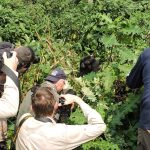
Photography is an important component in your safari therefore make sure that you have your camera ready, charge your batteries very well and if necessary, carry extra batteries as you will need to take as many photographs in the one hour you will be tracking gorillas. But make sure that you switch off your flash while taking gorilla photographs.
If it is hot, dont forget to carry a hat to protect you from the strong sun rays. You may also need to carry some sun glasses too. These are extra optionals.
Don’t forget that you are on safari and you want to have clear views of each and everything. Bwindi Impenetrable National park is home to over 350 birds, chimpanzees, black and white colubus monkeys among other primates, forest elephants and buffaloes so during your trek in search for the rare mountain gorillas, you will have a chance to spot some of the above. This is the same while tracking from Virunga National Park.
Gorilla trekking can take from 30 minutes to eight or so hours and that’s why a certain level of fitness is required. To add on that, we advise that you carry some energy giving snacks as supplements. Before departing from your lodge, you need to carry your packed lunch and lots of drinking water as you never know when you will return back. Energy giving foods can be bought in Uganda or Rwanda.
Although not essential for all, trekking poles are great in providing extra balance and support. Don’t forget to pack them before tracking.
Popular posts