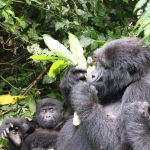
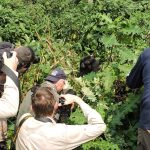
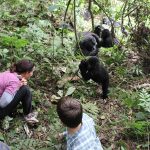
Gorilla trekking is an outdoor activity where tourists are allowed to see mountain gorillas for one hour after purchasing a gorilla permit in Uganda, Rwanda and Democratic Republic of Congo. The activity involves trailing through the tropical jungles of the 3 countries. In Uganda, the amazing experience takes place in the Impenetrable Bwindi forest and Mgahinga gorilla national park.
In the past last decade till date, Primate Safari Experiences Limited has been in the forefront of creating unforgettable memories of seeing the mountain gorilla and we celebrate this achievement by continuing to take our travelers through thick, misty, wet and impenetrable jungles and Rwanda’s Volcanoes to spend those memorable 60 minutes with the mighty giant cousin and his family.
The unique environment of Bwindi demands that trekkers approach their visit with caution and preparedness. The park’s terrain and relief, often slippery and steep, can be physically demanding even for seasoned adventurers. Sudden changes in weather, from sunshine to heavy rain, can further complicate navigation and test gear’s durability.
Wildlife encounters, the highlight of any visit, also require careful consideration. While observing mountain gorillas in their natural habitat is a profoundly moving experience, these are wild animals whose behaviour must be respected. Other forest residents, including elephants, monkeys, and various reptiles, add to the complexity of ensuring safe interactions.
Additionally, Bwindi’s remoteness means that trekkers are often far from medical facilities or emergency services. This underscores the importance of adhering to park guidelines, staying close to guides, and being equipped to handle minor injuries or challenges.
Understanding the environment, respecting the wildlife, and prioritizing personal safety is essential for a successful and enjoyable trek in Bwindi. The forest offers an unparalleled connection to nature but demands preparation, vigilance, and respect.
Ensuring safety while hiking is paramount, and there are several considerations for travelers to keep in mind. Here are some tips to enhance safety during your hiking adventures:
- Research and Plan
As you plan your gorilla trekking on the African land, thoroughly research about important stuffs including; the hiking trails, the suitable packing list, weather conditions and the terrain. Plan your route in advance and let someone know your itinerary and expected return time.
- Check Weather Conditions
Before setting off for gorilla trekking safari, stay informed about the weather forecast of the area since unfavorable weather can pose serious risks during a hike. So, you are advised to always be prepared for changes and consider postponing your hike if extreme conditions are expected.
- Hiking Equipment
For your own safety in the juggled forests, wear appropriate clothing and footwear for the terrain and weather. Carry essential gear such as a map, compass, GPS device, first aid kit, multi-tool, flashlight, and extra clothing. If you’re going on a longer hike, consider bringing food and water.
- Stay on Marked Trails
Stick to designated and well-marked trails to minimize the risk of getting lost. Venturing off-trail can lead to dangerous situations and negatively impact the local environment.
- Do not hike alone
As you are going for a gorilla trekking experience, remember that you do not have to hike alone in the forest areas. You will be escorted by different team persons like porters, game rangers, and other trekkers incase it is a group trip.
- Wildlife Awareness
As you hike through the forests, be aware of the wildlife in the area, and understand how to react in the presence of potentially dangerous animals. Keep a safe distance and avoid feeding wildlife.
- Hydration and Nutrition
Stay hydrated and carry enough water for the duration of your hike. Bring high-energy snacks to keep your energy levels up. Dehydration and fatigue can increase the risk of accidents.
- First Aid Skills
Basic first aid knowledge is crucial. Learn how to handle common injuries, carry a first aid kit, and be prepared to address minor issues such as blisters, cuts, or insect bites.
- Navigation Skills
Familiarize yourself with basic navigation skills using a map and compass or a GPS device. Knowing how to navigate ensures that you can find your way back if needed.
- Emergency Communication
Carry a fully charged mobile phone and, if possible, a backup power source. Know the emergency contact numbers for the area and consider investing in a personal locator beacon (PLB) or satellite communicator for remote locations.
- Time Management
Start your hike early enough to ensure you have sufficient daylight for your planned route. Avoid hiking in the dark, as it increases the risk of accidents.
By prioritizing safety, being well-prepared, and staying informed, you can enhance your overall hiking experience while minimizing potential risks.
What to Pack For a Safe Trek
Even the most regulated wildlife interaction environments depend heavily on what visitors bring.
Carrying a knife to a gunfight will do you no good.
Equipment, clothing, and materials define the boundaries of bodily safety, vector control, and gorilla protection, particularly in natural habitats like Bwindi, where saturation, slope dynamics, and proximity to non-human primates converge within a narrow corridor of controlled exposure.
Each item listed here plays a regulatory or preventive role, and its absence increases either human vulnerability or gorilla risk.
| Item | Operational Rationale |
| Waterproof trekking boots (with ankle support) | Reduces foot-rotation injuries on slick inclines. Bwindi’s internal trails maintain a damp base layer year-round, with downhill fall zones at grades of 20 to 60 percent. |
| Face mask (surgical or reusable, two-layer minimum) | Enforces the respiratory barrier required by UWA during gorilla proximity. Prevents pathogen drift to gorillas, who have zero immunity to human viral loads. |
| Long-sleeved shirt and long trousers (synthetic fabric preferred) | Shields skin from stinging vegetation (including Urtica massaica) and reduces midge bites and ticks. A personal containment barrier. |
| Lightweight rain jacket (non-poncho) | Prevents thermal drop-off during rainfall. Reduces chill-based fatigue and disorientation at elevation (>2,000 metres). Should compress into a daypack when not in use. |
| Gloves (gardening or grip-enhanced) | Protects palms during support grabs on steep or rooted sections. In practice, most guests rely on vegetation for balance during descent. |
| Insect repellent (non-aerosol, DEET or Picaridin-based) | Reduces the risk of mosquito bites in low-wind zones. No aerosol use is allowed due to the risk of scent release near gorilla resting areas. |
| Reusable water bottle (1.5L minimum, secured lid) | Maintains hydration during 4–6-hour trek segments. Reduces cognitive lapse and physical fatigue on return segments. Plastic litter is a regulatory risk. |
| Compact daypack with chest strap and rain cover | Ensures hands remain free throughout the trek. Distributes load safely. Prevents dropped gear during the sighting stage, where re-approach is not allowed. |
| Backup face mask | Required in the event of moisture saturation or strap failure during the final 500 metres. Guides carry limited extras; guests are expected to be self-equipped. |
| Personal sanitiser (70% alcohol-based, non-spray) | Supplementary field hygiene. Mandatory before the final trial segment. It should be accessible in the outer zip pocket for clarity of compliance. |
Popular posts