

What to Expect on a Self Guided Gorilla Tour?
A self-drive gorilla trek is one of the most adventurous and rewarding ways to explore Uganda. It combines the freedom of a road trip with the unforgettable experience of meeting mountain gorillas in their natural rainforest habitat. Unlike guided group tours, a self-drive safari allows travelers to move at their own pace, choose their stopovers, and experience the countryside more personally.
Freedom and flexibility during the journey
One of the biggest advantages of a self-drive safari is flexibility. Travelers can decide where to stop, how long to stay in each destination, and which attractions to explore along the way.
During the drive to southwestern Uganda, expect scenic countryside landscapes, rolling hills and terraced farms, tea plantations and local markets plus incredible stopovers at places like the Equator and Lake Bunyonyi.
The journey itself becomes part of the adventure, especially for travelers who enjoy road trips and photography.
Long but scenic driving distances
Gorilla trekking destinations such as Bwindi Impenetrable National Park and Mgahinga Gorilla National Park are located in southwestern Uganda, far from Kampala and Entebbe. For that case, expect long driving hours – Kampala/Entebbe to Bwindi takes 7 to 10 hours, Kampala to Kisoro takes 9 to 10 hours and then Kigali to Bwindi takes 4 to 5 hours. Most travelers break the journey with overnight stops in towns like Mbarara, Kabale, or at Lake Bunyonyi.
Rough roads in some areas
Although major highways are paved, roads near gorilla parks can be rough, steep, muddy, or slippery during rainy seasons. Self-drive travellers should expect gravel and dirt roads near the park sectors, mountain roads with sharp bends, possible delays plus limited road signs in remote areas.
A 4×4 vehicle is highly recommended for safety and comfort, especially when traveling to sectors like Nkuringo and Rushaga.
Early morning gorilla trekking briefing
On trekking day, visitors must report early to the park headquarters for registration and briefing about the safety guidelines. After, they head to the park rainforests by the lead of the experienced ranger guide in search of the endangered mountain gorillas. Trekkers are divided into small groups and assigned a specific gorilla family to visit. Once found, they are allowed to spend a full hour in their presence.
Challenging but rewarding forest hikes
Gorilla trekking involves hiking through dense rainforest terrain. The experience can range from easy to physically demanding depending on the gorilla family’s location. During the trek, expect muddy trails, steep slopes, thick vegetation and hiking time ranging from 1 to hours or more. Porters are available to help carry bags and assist during difficult sections of the hike.
Despite the challenge, the moment you finally encounter mountain gorillas in the wild is unforgettable.
Close encounters with mountain gorillas
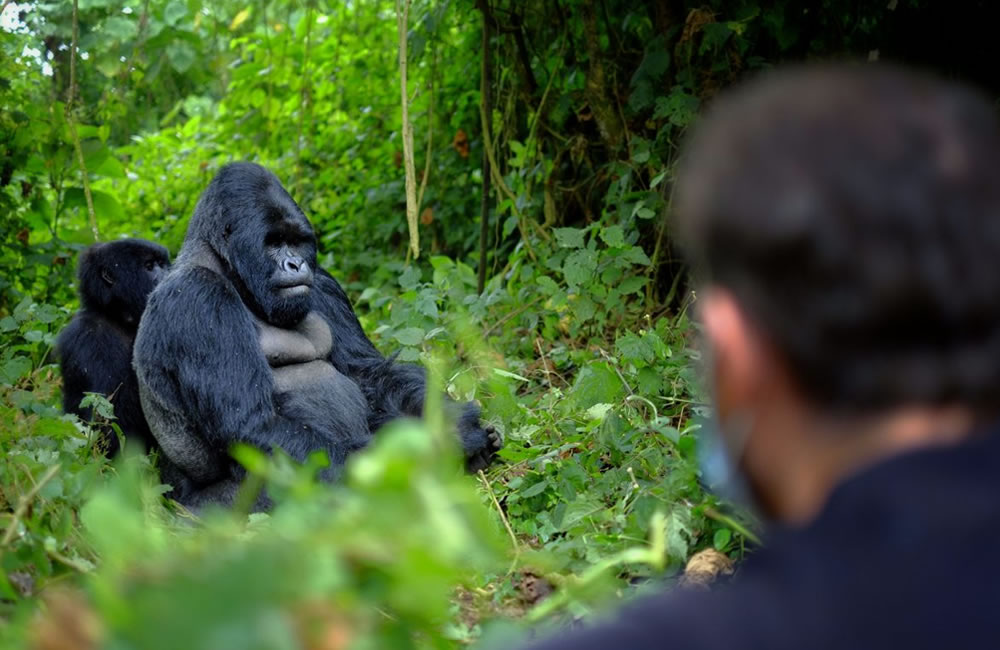
The highlight of the safari is spending one hour observing mountain gorillas in their natural habitat. During the magical experience, visitors often see silverbacks watching over the family, young gorillas playing, mothers caring for infants and gorillas feeding and moving through the forest. This encounter is calm, emotional, and deeply memorable for many travelers.
Basic to luxury accommodation options
Self-drive travelers can choose accommodation that matches their budget and travel style. Options include; budget campsites, midrange and luxury lodges. Many lodges are located close to trekking sectors to reduce morning travel time. The sectors are – Buhoma, Ruhijja, Nkuringo and Rushaga.
Wildlife and cultural experiences along the way
A self-drive gorilla safari can easily be combined with other attractions in Uganda. Often, travellers add wildlife watching in Queen, mountain hiking in Rwenzori, chimpanzee tracking in Kibale and relaxation in Lake Bunyonyi. This creates a more complete Ugandan safari experience.
Limited internet and remote conditions
Remote park regions like Kidepo Valley National Park may have weak phone signals, limited internet access, few fuel statins and minimal ATM services. For that case, travelers should prepare in advance by downloading offline maps, carrying enough cash, fueling in major towns and packing essential supplies.
Best time for a self-drive gorilla safari
The best seasons are usually – June to September and December to February. This is because the trails and roads are always dry thus making the drive, forest hiking and wildlife viewing opportunities easier.
Rainy seasons can make some roads more difficult but also provide greener scenery and fewer tourists.
Conclusion
A self-drive gorilla trekking safari is an exciting combination of road adventure, nature, wildlife, and cultural discovery. Travelers should expect long scenic drives, challenging hikes, changing weather, and remote wilderness conditions. However, the reward of standing face-to-face with mountain gorillas in the wild makes every moment worthwhile.
With proper planning, a reliable 4×4 vehicle, and a spirit of adventure, a self-drive gorilla trekking safari becomes one of the most memorable travel experiences in Africa.